
Key Takeaways
- Tankless water heaters deliver hot water on demand without a storage tank, so you can run longer showers as long as the unit can keep up with demand—and many models can last 20+ years with proper maintenance.
- Heat pump water heaters achieve the highest efficiency by moving heat rather than generating it, thereby significantly reducing electric water-heating costs.
- Both systems can reduce energy waste compared to traditional tank water heaters, with heat pump water heaters typically delivering the biggest efficiency gains when installed in the right space.
- Installation complexity varies by system: tankless systems require gas line or electrical upgrades, and heat pumps work most efficiently in warmer spaces.
- At Engle Services Heating & Air, Electrical, and Plumbing, we provide expert installation of both tankless and heat pump water heaters across Birmingham and Central Alabama, backed by professional sizing, rebate assistance, and 24/7 service.
Tankless and heat pump water heaters can both cut energy waste compared to standard tank units, but they do it in very different ways. Below is a simple breakdown of how each works, what they cost to run in Alabama, and which one makes the most sense based on your home and hot-water needs.
How Tankless Water Heaters Work
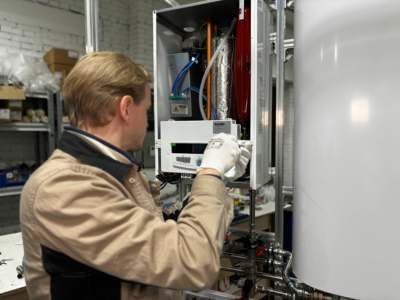
Tankless water heaters heat water instantly as it flows through the unit, eliminating the need for storage tanks. When you turn on a hot water tap, cold water travels through a pipe into the heater, where powerful gas burners or electric elements rapidly heat it to your preset temperature in seconds.
This on-demand approach eliminates standby heat loss, the energy waste traditional tanks experience, keeping stored water hot continuously. The compact units mount on walls, saving valuable floor space in garages or utility closets common throughout Birmingham and Montgomery homes.
Gas models use high-efficiency burners with modulating flames that adjust intensity based on demand, while electric versions rely on high-powered heating elements. Rated flow varies by model and incoming water temperature, but many units deliver enough hot water for one or two fixtures at a time. Whole-house models scale up for larger families who need multiple showers running during morning rushes.
Proper sizing matters significantly. Professional installation accounts for your household's peak usage patterns, ensuring adequate hot water during high-demand periods. With regular maintenance, tankless systems last 20+ years, roughly double the lifespan of traditional tank heaters.

Why Choose Engle Services:
- ✅ NATE-Certified HVAC technicians
- ✅ 25 Years in Business
- ✅ Rheem Pro Partner and Carrier authorized dealer
- ✅ Licensed, insured, and BBB accredited A+
- ✅ Flexible financing options available
- ✅ Serving Central Alabama and Fort Walton Beach, Florida
How Heat Pump Water Heaters Work
Three Times the Efficiency
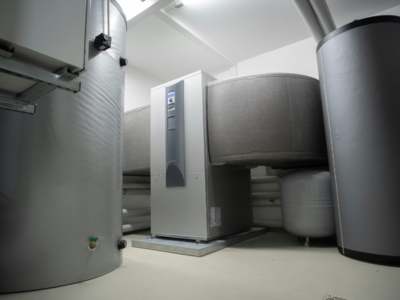
Heat pump water heaters achieve up to three times the efficiency of standard electric resistance heaters by transferring existing heat rather than generating it directly.Heat pump water heaters combine innovative heat pump technology with storage tanks, pulling heat from the surrounding air to efficiently heat water. Instead of generating heat directly, these systems move existing heat from one place to another.
A fan draws ambient air over evaporator coils filled with refrigerant, which absorbs thermal energy. The refrigerant compresses this captured heat, significantly increasing its temperature. The hot refrigerant then passes through a heat exchanger that transfers warmth to water in the storage tank, achieving up to three times the efficiency of standard electric resistance heaters.
Unlike tankless systems, heat pump water heaters store 40–80 gallons, providing a steady supply during high-demand periods. In central Alabama’s relatively mild winters, overnight temperatures often fall into the 30s°F, and these units can perform very well when installed in an appropriate space.
However, they’re designed to operate in spaces roughly 40°F to 120°F; the warmer the surrounding air, the more efficiently they run. In cooler areas (often below ~50–55°F), efficiency drops and many hybrid units rely more on backup electric resistance heat. Hybrid models automatically switch to backup electric resistance heating when ambient temperatures drop too low.
An additional benefit in Alabama's humid climate: heat pump water heaters can dehumidify and cool the surrounding space as they run, because they pull heat (and some moisture) from the air. This cooling effect provides welcome relief in garages during Birmingham's steamy summers.
Efficiency & Performance Comparison
Efficiency measurements for water heaters use Uniform Energy Factor (UEF) ratings—an efficiency metric that lets you compare similar water heaters. Higher UEF generally means higher efficiency within the same usage category.
Tankless heaters span a wide efficiency range. Many ENERGY STAR® gas tankless models fall around UEF 0.95–0.98, while electric tankless units commonly land in the ~0.91–0.99 range depending on the model. They shine brightest in homes with low-to-moderate usage by avoiding standby losses from stored hot water.
Heat pump water heaters lead efficiency rankings, with many ENERGY STAR® models in the UEF ~3.0–4.0 range (and some above 4.0).
This remarkable performance stems from moving heat rather than generating it, using one unit of electricity to produce three units of heat energy. It is important to note that performance varies with installation conditions. Heat pumps work best in warmer indoor spaces; they’re designed to operate in ambient temperatures roughly 40°F to 120°F, with efficiency improving as the surrounding air gets warmer.
When installed in unheated garages, hybrid models activate less efficient backup systems during cold snaps, reducing overall efficiency. Tankless systems maintain consistent performance regardless of ambient temperature, as long as gas or electricity remains available.
Operational Costs in Alabama
Annual operating costs depend on fuel type, household usage, and local utility rates. For a typical Alabama family, the numbers can show clear differences between systems and traditional tank heaters.
- Tankless gas units can reduce energy waste compared to traditional gas tank heaters by avoiding the constant standby reheating a storage tank requires.
- Electric tankless models provide cost-effective operation, primarily for low-demand households or homes with solar panel systems that offset electricity costs.
- Heat pump water heaters deliver the lowest operating costs among all water heater types, with savings that can exceed those of traditional electric resistance tanks significantly.
Initial investment varies between systems. Heat pump systems and tankless gas units require professional installation, which incurs associated costs. These upfront investments typically pay back through energy savings over several years, with heat pumps generally offering faster payback periods.
Federal incentives can sweeten the deal—but eligibility depends on meeting efficiency requirements and having the equipment placed in service by December 31, 2025. Under the IRS Energy Efficient Home Improvement Credit (Section 25C), qualified heat pump water heaters may be eligible for 30% of project costs up to $2,000 per year. Qualified ENERGY STAR® natural gas/propane/oil water heaters (including ENERGY STAR® tankless gas models with UEF ≥ 0.95) may be eligible for 30% of project costs up to $600.
Note: for items placed in service in 2025, the IRS requires reporting a Qualified Manufacturer Identification Number (QMID) on your tax return. Alabama utilities may also offer rebates that vary by provider, location, and efficiency tier, so it’s worth checking current local programs when comparing total installed cost.
Pros & Cons of Each System
Tankless Water Heaters:
- Space-saving wall-mount design frees floor space.
- Endless hot water supply for back-to-back showers.
- Long lifespan of 20+ years with proper maintenance.
- Energy savings through the elimination of standby loss.
- Higher upfront installation costs than traditional tanks.
- Flow rate limitations may require multiple units for large homes.
- Gas models need proper venting and combustion air supply.
Heat Pump Water Heaters:
- Lowest operating costs among all water heater types.
- Qualifies for substantial federal and utility rebates.
- Provides cooling and dehumidification as bonus benefits.
- Quieter operation than older water heater technologies.
- Requires conditioned space or a hybrid model for cold environments.
- Slower recovery time than some options when reheating a large volume of water.
- Higher initial purchase and installation costs.
How Heat Pump Water Heaters Work
Professional Installation is Essential
Professional installation and regular maintenance are essential for optimal water heater performance and longevity.Installation & Maintenance Considerations
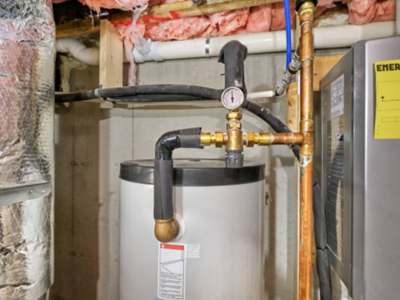
Professional installation typically takes several hours, depending on the system's complexity and the home's configuration. Tankless installations often require gas line upgrades, new venting systems, or electrical panel modifications, adding to total project costs. Heat pump systems require 240-volt electrical circuits, adequate airflow clearance, and proper condensate drainage, which may require specific upgrades.
Maintenance requirements differ between systems. Tankless heat exchangers need annual flushing to prevent mineral buildup, a service that helps maintain peak performance. Heat pump filters require quarterly cleaning (easily done by homeowners), and coils need professional cleaning annually. Both systems benefit from preventive maintenance plans that catch minor problems before they become expensive failures.
Tankless Water Heater vs Heat Pump: Comparison Table
| Feature | Tankless Water Heater | Heat Pump Water Heater |
|---|---|---|
| Efficiency (UEF) | High efficiency ratings | Exceptional efficiency ratings |
| Annual Operating Cost | Lower than traditional tanks | Lowest among all types |
| Installed Cost | Moderate to high | Moderate to high |
| Lifespan | 20+ years | 10–15 years |
| Best For | High flow demand, unlimited hot water needs | Maximum efficiency, moderate usage patterns |
| Space Requirements | Minimal (wall-mount) | Moderate (needs clearance) |
| Federal Tax Credit | Up to $600 (expires 12/31/25) | Up to $2,000 (expires 12/31/25) |
Why Engle Services for Your Water Heater Upgrade
Expertise and Comprehensive Support
We provide the expertise and comprehensive support to ensure optimal selection and installation of a water heater for your home's specific needs.Choosing between tankless and heat pump water heaters requires careful assessment of your home's specific needs, usage patterns, and existing infrastructure. At Engle Services Heating & Air, Electrical, and Plumbing, we bring over 20 years of experience helping Birmingham and Central Alabama homeowners make informed decisions about water heating systems.
As a Rheem Pro Partner and authorized Carrier dealer, we install industry-leading equipment backed by comprehensive warranties. Our NATE-certified technicians conduct thorough home evaluations, calculate your household's peak demand, assess installation requirements, and factor in available rebates to provide accurate project estimates. We handle all paperwork for federal tax credits and utility incentives, maximizing your savings.
Whether you choose a tankless system for unlimited hot water or a heat pump for maximum efficiency, we ensure professional installation that meets all code requirements. Our 24/7 emergency service provides peace of mind, and our maintenance plans keep your investment running efficiently for years.
Frequently Asked Questions (FAQs)
What maintenance does each system require beyond the basics?
For tankless systems, watch for fluctuating water temperatures, unusual noises during operation, or reduced flow rates; these often signal mineral buildup affecting the heat exchanger. Heat pump units may show frost buildup on coils, increased running times, or changes in the temperature of air discharged from the unit. Both systems benefit from professional inspections that check electrical connections, test safety features, and verify proper ventilation, which aren't part of routine homeowner maintenance.
How do extreme weather events affect each system's performance?
During extended power outages, neither electric heat pump nor electric tankless systems function. Most gas tankless water heaters still require electricity for controls and operation, so they typically won’t run during an outage unless supported by a compatible backup power source. In extreme cold, heat pump water heaters can rely more on backup electric resistance heating, which reduces efficiency. In very warm conditions, they may perform more efficiently because warmer air provides more heat energy to move. These weather-related differences can help homeowners plan for backup power or supplemental options.
Can these systems integrate with smart home technology?
Many heat pump and tankless models now include WiFi capabilities, allowing remote temperature adjustment, usage monitoring, and maintenance alerts through smartphone apps. Some systems integrate with home automation platforms like Alexa or Google Home, enabling voice control and scheduling.
What happens during the transition period when switching from a tank to a tankless or heat pump?
Converting to a tankless gas system may require significant plumbing and gas line modifications, potentially leaving homeowners without hot water for one to two days. Heat pump installations converting from gas may require new electrical service and may involve changes for adequate airflow clearance and condensate drainage. Professional installers can sometimes schedule work to minimize disruption. Understanding the realistic installation timeline and having contingency plans (such as temporary shower arrangements) helps homeowners prepare for the transition.
Are there regional considerations specific to Alabama that affect system choice?
The state's high humidity levels make heat pump water heaters particularly valuable for their dehumidification benefits, potentially reducing strain on air conditioning systems. However, Alabama's varied geography means installation requirements differ—homes in northern Alabama's cooler elevations may need hybrid heat pump models more than those in coastal areas. Professionals like us at Engle Services can help you arrive at the best choice depending on your specific needs.
*Note: Price estimates reflect current market costs and may vary based on your specific situation. For a personalized quote tailored to your needs, contact Engle Services directly or schedule service now.
Engle Services offers comprehensive plumbing services in Birmingham, Shelby County (Hoover, Chelsea), Sylacauga, Talladega, Alabaster, Pell City, Dadeville, Wetumpka, Montgomery
 Ready to schedule with our team of HVAC Technicians, Electricians, and Plumbers?
Schedule an appointment online or give us a call at (855) GET-ENGLE
Ready to schedule with our team of HVAC Technicians, Electricians, and Plumbers?
Schedule an appointment online or give us a call at (855) GET-ENGLE